
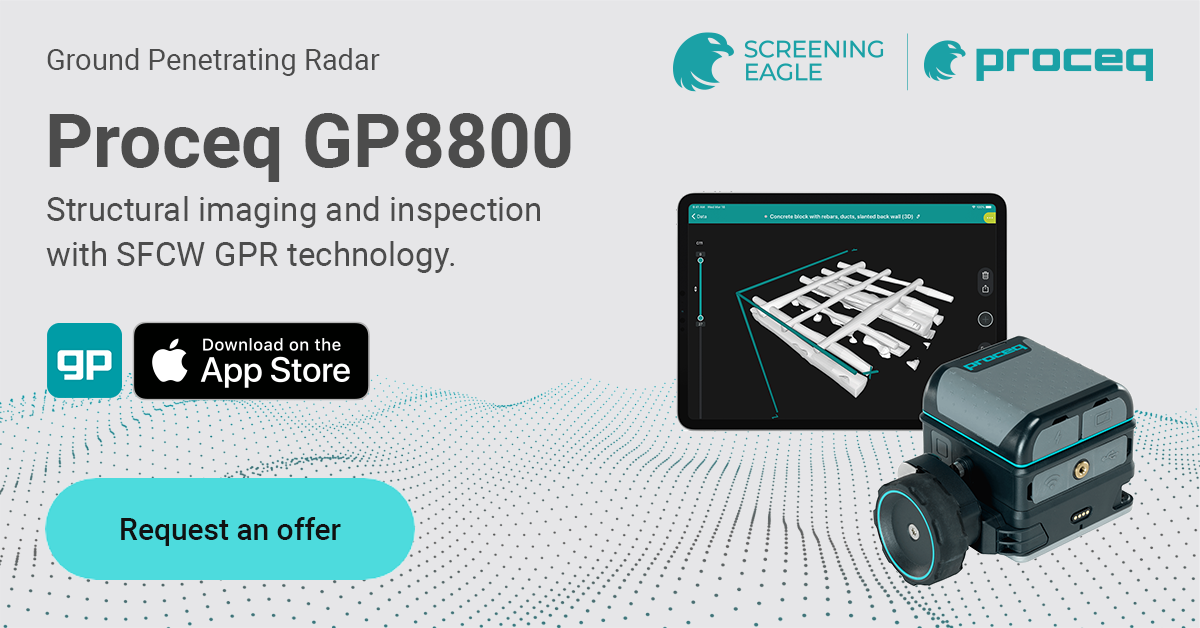
Proceq GP8800
- Model
- GP8800
- Category
- Concrete GPR
- Solutions
- Concrete and Infrastructure Inspection
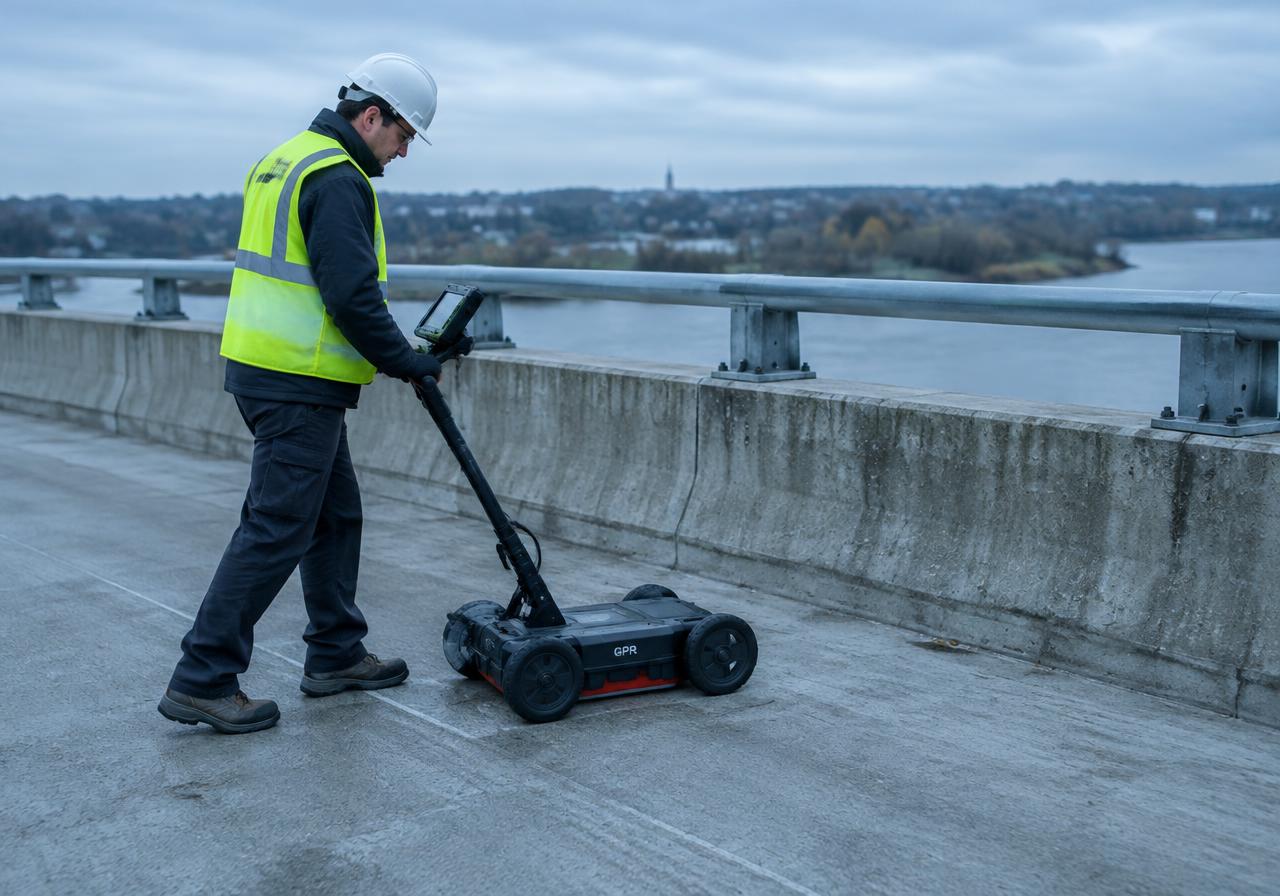
The rugged, lightweight Swiss Made probe packs our unique radar technology in a tiny footprint with gigantic clarity and depth. This makes it possible to locate rebar and tendon ducts by inspecting overhead, in tight spots, close to walls, from the edge of the slab—and in congested spaces, such as underneath pipes. Concrete is the backbone of modern construction and infrastructure, thanks to its versatility and robustness. Evaluating its quality is vital to ensure that structures can withstand various loads and environmental factors. Concrete quality assessment involves multiple tests that examine different properties of the mixture, such as compressive strength, workability, and permeability. By performing these tests, civil engineers can identify potential issues and rectify them, guaranteeing a safe and long-lasting structure. NDT methods have become essential in evaluating concrete quality, as they allow for the monitoring of structures during their service life without causing any harm. These techniques are especially useful for detecting hidden defects and assessing the condition of existing structures, ensuring their safety and longevity. The most widely used and reliable techniques that help ensure structural soundness are: Ultrasonic Pulse Velocity; Ultrasonic Pulse Echo; Rebound Hammer and Ground Penetrating Radar. NDT methods for concrete quality assessment offer invaluable insights into the material's properties without compromising structural integrity. By utilizing techniques such as the ultrasonic pulse velocity test, rebound hammer test, and ground penetrating radar, civil engineers can effectively evaluate concrete quality and make informed decisions regarding structural maintenance and rehabilitation.
Overview
The rugged, lightweight Swiss Made probe packs our unique radar technology in a tiny footprint with gigantic clarity and depth. This makes it possible to locate rebar and tendon ducts by inspecting overhead, in tight spots, close to walls, from the edge of the slab—and in congested spaces, such as underneath pipes. Concrete is the backbone of modern construction and infrastructure, thanks to its versatility and robustness. Evaluating its quality is vital to ensure that structures can withstand various loads and environmental factors. Concrete quality assessment involves multiple tests that examine different properties of the mixture, such as compressive strength, workability, and permeability. By performing these tests, civil engineers can identify potential issues and rectify them, guaranteeing a safe and long-lasting structure. NDT methods have become essential in evaluating concrete quality, as they allow for the monitoring of structures during their service life without causing any harm. These techniques are especially useful for detecting hidden defects and assessing the condition of existing structures, ensuring their safety and longevity. The most widely used and reliable techniques that help ensure structural soundness are: Ultrasonic Pulse Velocity; Ultrasonic Pulse Echo; Rebound Hammer and Ground Penetrating Radar. NDT methods for concrete quality assessment offer invaluable insights into the material's properties without compromising structural integrity. By utilizing techniques such as the ultrasonic pulse velocity test, rebound hammer test, and ground penetrating radar, civil engineers can effectively evaluate concrete quality and make informed decisions regarding structural maintenance and rehabilitation.
Applications: Rebar location and cover measurement · Concrete strength estimation · Void and defect detection · Corrosion assessment · Bridge and tunnel inspection
Key capabilities
- Superior insights thanks to unparalleled depth and clarity of data from the powerful probe
- Easy to learn and to operate with our user-friendly, feature-rich, intelligent software
- Unmatched productivity through user-centric inspection ergonomics and digital workflow
- The world’s first wireless and handheld SFCW GPR
- Non-Migrated view allowing to see hyperbolas
- Migrated view allowing to see the objects
- Improved linearization algorithm increasing depth accuracy
- The world’s first cloud storage for GPR measurements
Technical specifications
| Depth accuracy | ± 5 mm / 0.2 in (upon direct calibration) |
|---|---|
| Accuracy in distance | <2% error on distance |
| Minimum distance between objects (like rebars) | GP8000 or GP8100: 4 cm / 1.6 in GP8800: 3cm / 1.2 in Note: for objects' depth at 5 cm / 2 in |
Downloads
Solutions
Concrete and Infrastructure Inspection
Non-destructive testing with GPR, rebar detection, rebound and ultrasonic instruments.
Related products
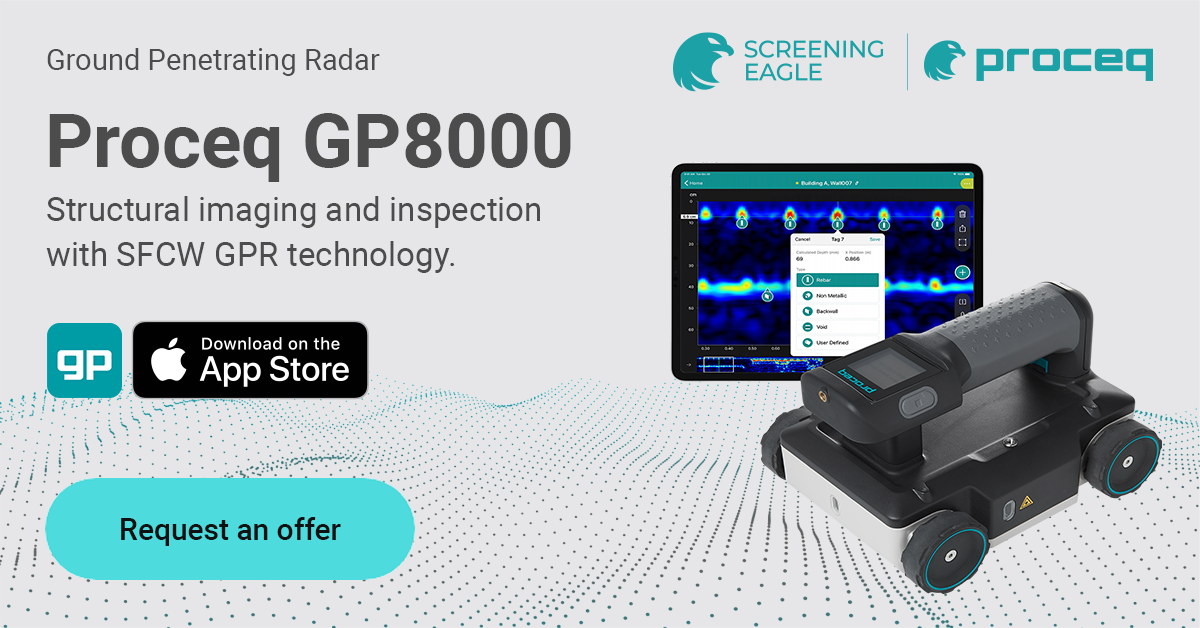
Proceq GP8000
Proceq’s ultra wideband GP8000, with patented ultra-wideband technology, is the most innovative portable ground penetrating radar available for concrete testing. Proceq Ground Pen
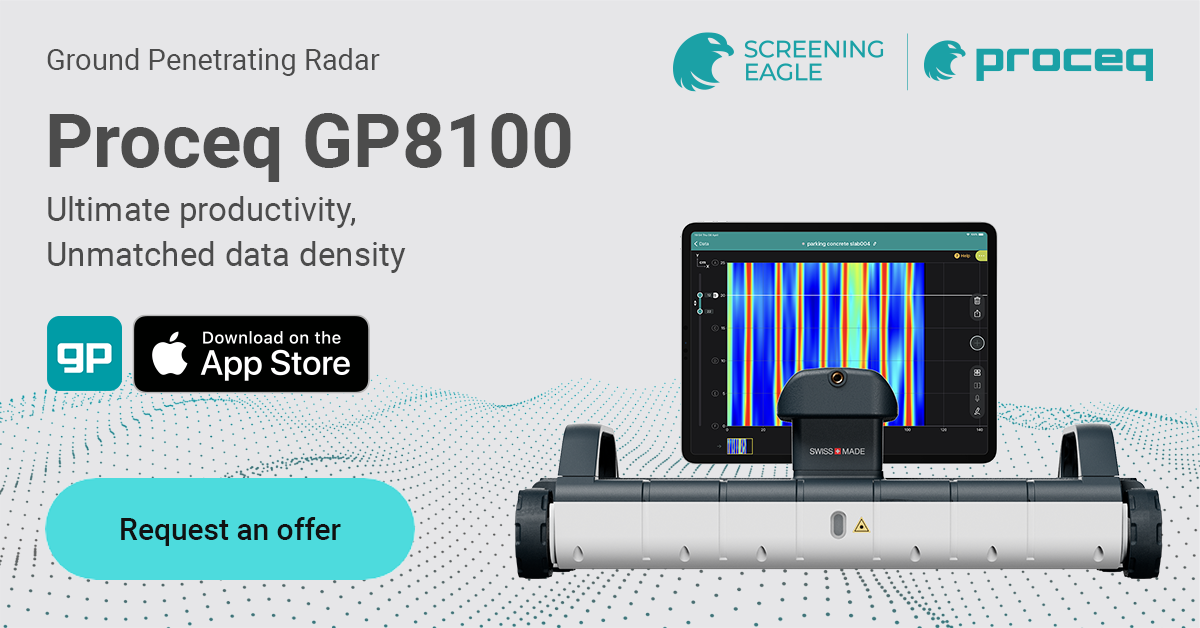
Proceq GP8100
Highly productive portable concrete GPR array, enabling quick object detection and superior data collection. Concrete is the backbone of modern construction and infrastructure, th
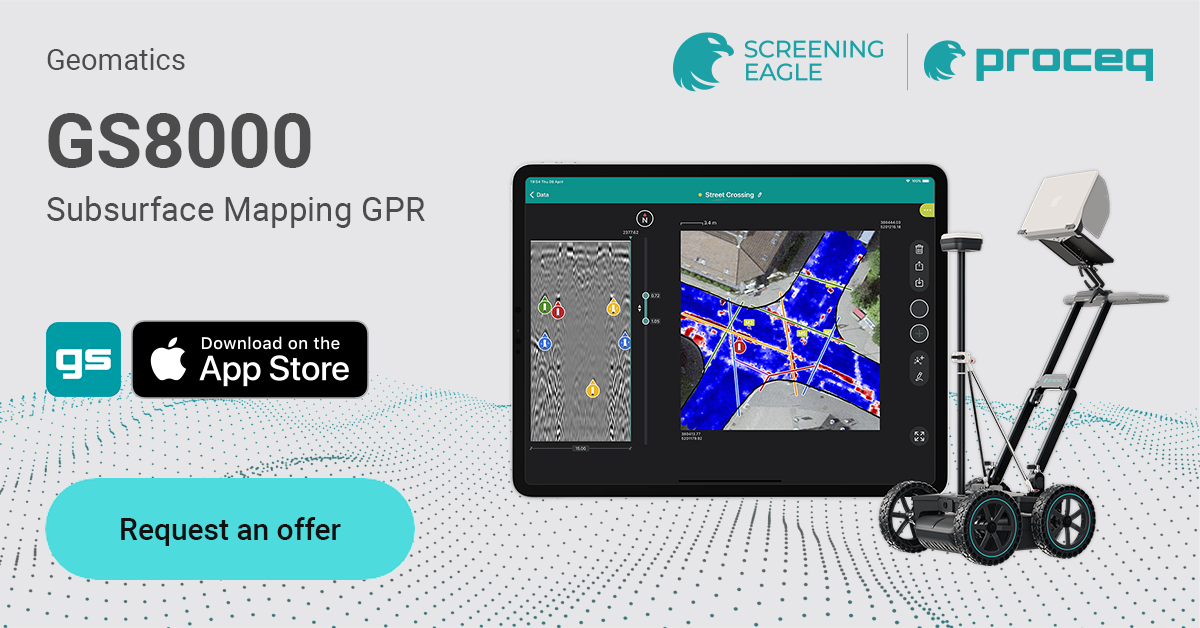
Proceq GS8000
Discover our most advanced GPR for utility mapping, subsurface detection and underground visualisation. Damage prevention / Excavation safety / Utility locating & mapping / Subsur
Proceq GS8000 Pro
Discover our most advanced GPR for utility mapping, subsurface detection and underground visualisation. Damage prevention / Excavation safety / Utility locating & mapping / Subsur